
RushFiles vs Nextcloud Enterprise: a service-provider comparison
RushFiles vs Nextcloud Enterprise for MSPs | Compare RushFiles and Nextcloud Enterprise from a service-provider perspective. Review EFSS features, deployment models, multi-tenancy, branding, and partner fit.
Service providers evaluating enterprise file sharing platforms often compare two approaches: operating a solution such as Nextcloud Enterprise themselves, or delivering filesharing through a platform built specifically for service providers.
This article compares RushFiles and Nextcloud Enterprise from a service-provider perspective. The focus is on operating model, deployment, responsibility, and partner fit. It is not a feature checklist, but a practical comparison for MSPs, CSPs, and IT resellers delivering file services to business customers.
Target audience and evaluation context
This comparison is written for:
- Managed Service Providers
- Cloud and hosting providers
- IT resellers and system integrators
- Internal IT providers serving multiple business units or customers
The comparison focuses on Nextcloud Enterprise, as this is the edition typically used in commercial and managed environments. Community editions are not covered, as they follow a different support and operating model.
Core positioning overview
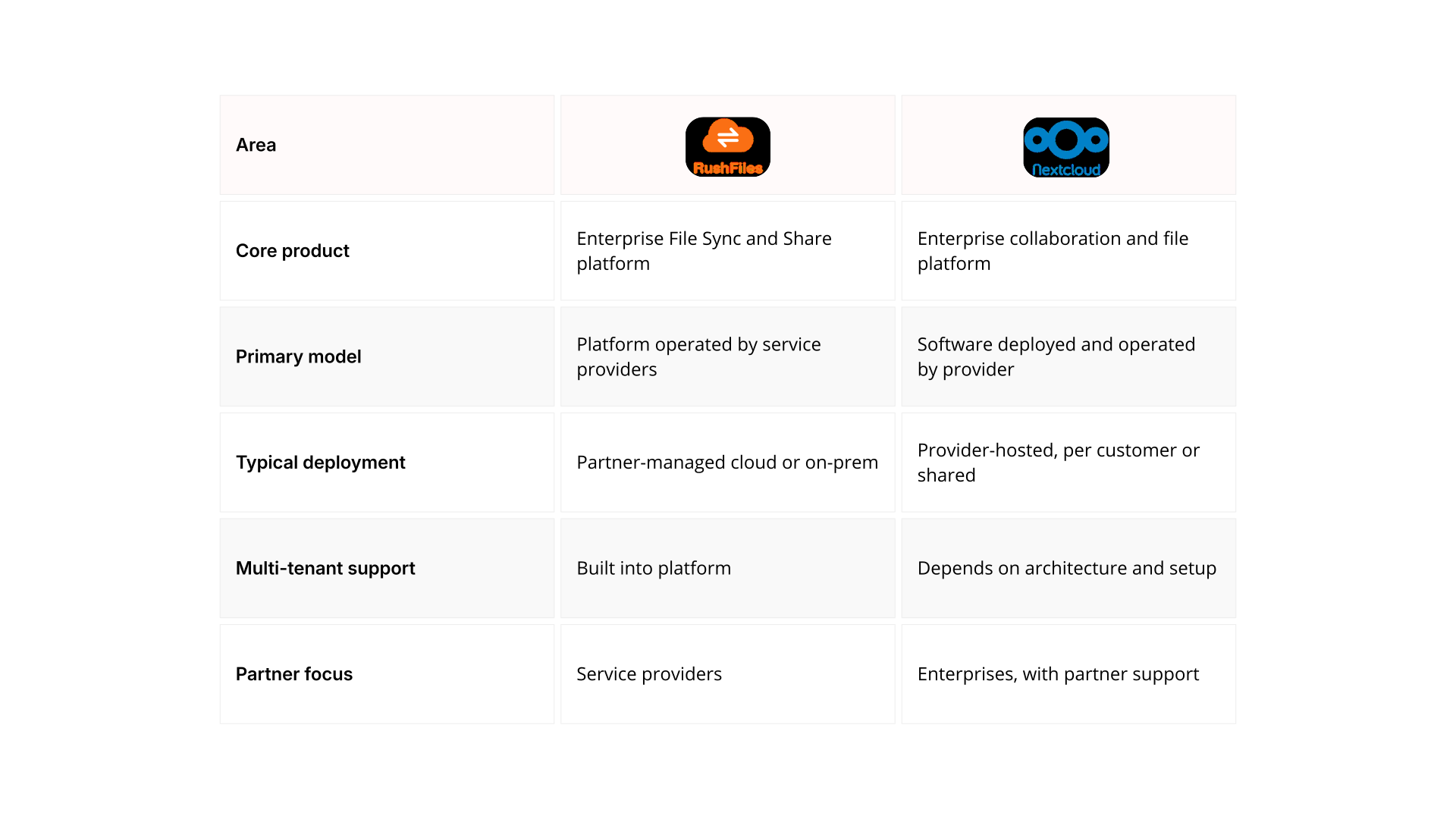
Both platforms support enterprise file sharing. The main difference lies in how the service is operated and scaled by the provider.
Deployment and operating model
RushFiles
RushFiles is an EFSS platform designed to be operated by service providers as a managed service. It supports:
- On-prem deployment inside provider infrastructure
- Partner-managed cloud deployment
- Clear separation between platform software and customer data
- Multi-customer operation from a single platform
The platform is built to reduce the need for providers to assemble and maintain a full collaboration stack.
Nextcloud Enterprise
Nextcloud Enterprise is deployed and operated by the provider. This typically involves:
- Hosting and maintaining the application stack
- Managing upgrades and version compatibility
- Integrating storage, databases, and additional components
- Designing tenant separation and access controls
This provides flexibility, but places more operational responsibility on the provider.
Multi-tenancy and customer isolation
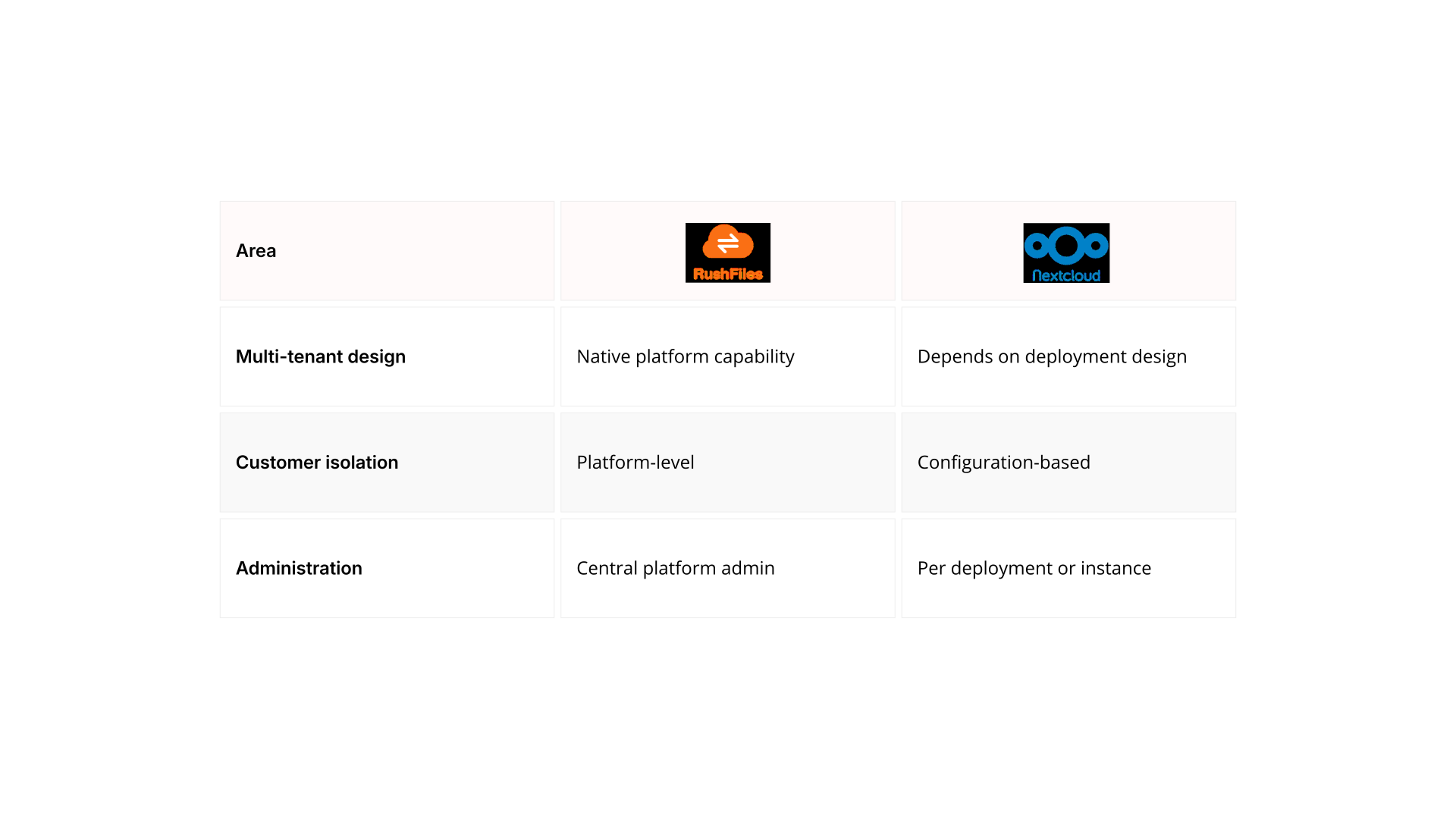
For providers serving multiple customers, multi-tenancy affects scalability, support effort, and operational consistency. RushFiles is designed for multiple customers on a single platform, while Nextcloud Enterprise multi-tenancy depends on deployment design and isolation approach.
Storage and infrastructure responsibility
RushFiles
- Storage location defined and controlled by the provider
- Supports public, private, hybrid, and on-prem storage
- Clear separation between platform responsibility and infrastructure responsibility
- No vendor access to customer data
Nextcloud Enterprise
- Storage architecture fully defined by the provider
- Supports local, shared, and object storage
- Provider responsible for performance, scaling, and maintenance
- Greater flexibility, with operational responsibility remaining with the provider
Both approaches can meet compliance and data sovereignty requirements when designed correctly.
Feature scope and collaboration
Both platforms cover core enterprise file sharing requirements, including:
- File sync and sharing
- Versioning and recovery
- Internal and external collaboration
- Access controls and permissions
- Desktop and mobile clients
Nextcloud Enterprise offers a wider collaboration ecosystem through additional applications. RushFiles focuses primarily on secure file sharing and service delivery, with collaboration features aligned to that use case.
Partner and commercial model
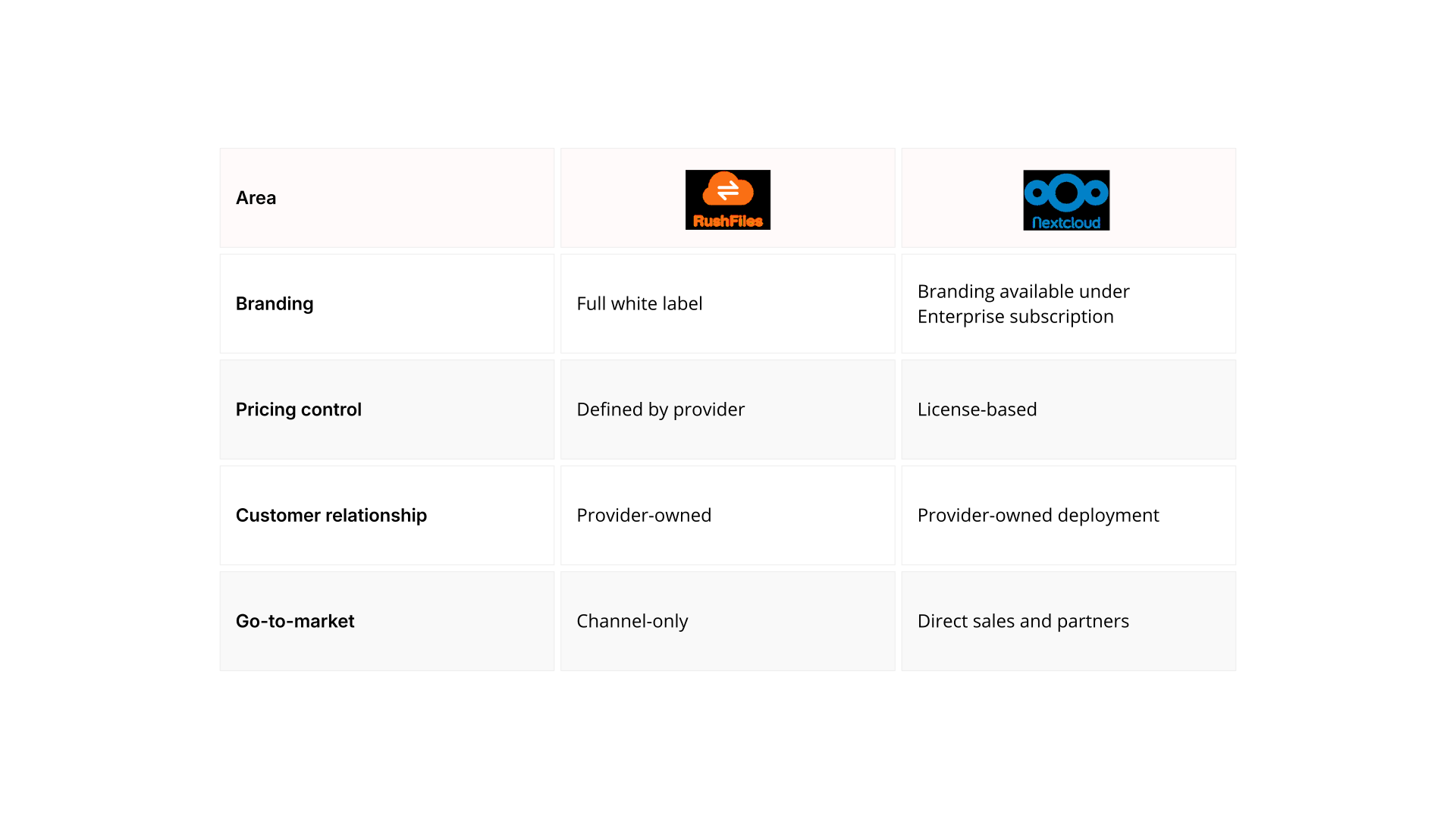
RushFiles follows a B2B2B model where service providers own branding, pricing, andcustomer relationships. Nextcloud Enterprise supports partners but operates within a moretraditional enterprise software model.
Support and lifecycle management
RushFiles
- Platform updates and maintenance handled centrally
- Providers focus on infrastructure and customer service
- Predictable update and lifecycle approach
Nextcloud Enterprise
- Providers manage upgrades and compatibility
- More control over timing and versions
- Provider responsible for performance, scaling, and maintenance
- The provider manages upgrades, compatibility, and lifecycle
The difference is not quality, but where responsibility and risk are placed
Compliance and data control
Both platforms can be used in regulated environments when deployed appropriately.
RushFiles emphasizes:
- Provider-controlled data location
- Clear access boundaries
- Audit and control features aligned with managed services
Nextcloud Enterprise emphasizes:
- Flexible compliance configurations
- Custom deployment options
- Broad integration capabilities
Actual compliance depends on deployment and operations, not software alone.
When RushFiles is typically a better fit
RushFiles is often chosen when providers want:
- An EFSS platform ready to operate as a service
- Efficient multi-customer delivery
- White-label capability
- Clear operational boundaries
- Lower long-term operational effort
When Nextcloud Enterprise is typically a better fit
Nextcloud Enterprise is often chosen when providers want:
- Extensive customization
- Broader collaboration functionality
- Full control over application architecture
- Willingness to manage the full stack
Summary
RushFiles and Nextcloud Enterprise both support enterprise file sharing, but they serve different provider operating models.
The choice is less about features and more about how a service provider prefers to deliver, operate, and scale file sharing services over time.
About this comparison
This comparison is based on publicly available documentation and vendor materials as of 10 February 2026. Product capabilities and deployment models may change over time. If any information is inaccurate, please contact marketing@rushfiles.com.